
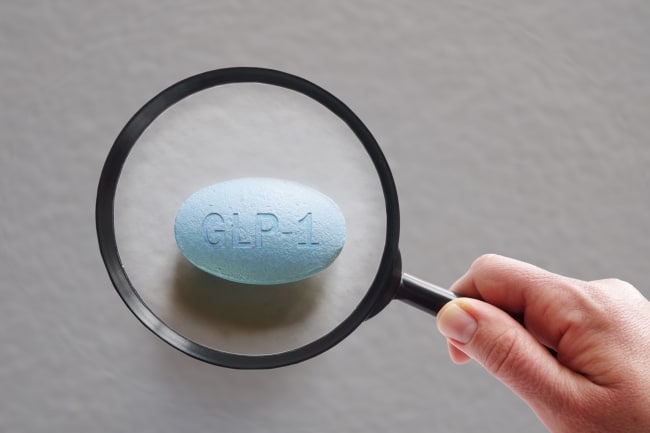
The Medicare GLP-1 Bridge program has gone into effect. As a result, eligible enrollees will have access to certain GLP-1 weight loss medicines at $50 a month. Given the popularity of these weight loss drugs, there’s a good chance that many of your Medicare clients will be interested, and they may have questions for you.
What Is the Medicare GLP-1 Bridge Program?
Medicare’s new GLP-1 Bridge program provides temporary coverage for certain GLP-1 weight loss drugs at $50 for a one-month supply.
Without insurance coverage, GLP-1 weight loss drugs can cost around $349 to $499 a month, depending on the manufacturer, according to Keck Medicine of USC, so this is a significant savings.
The Bridge program is set to run from July 1, 2026, to December 31, 2027. During this time, three GLP-1 drugs will be covered:
- Foundayo (tablet)
- Wegovy (injection or tablet)
- Zepbound (KwikPen only)
The $50 Cost Does NOT Count Toward the Deductible
The amount that Medicare enrollees pay to participate in the Bridge program does not count toward the prescription drug plan’s deductible or yearly out-of-pocket limit.
If you get GLP-1 drugs for six months in 2026, you’re looking at a cost of $300. Let’s say your 2026 Medicare Part D deductible is $615 and your out-of-pocket maximum is $2,100. The $300 won’t count toward your $615 deductible, so these two costs together come to $915. Furthermore, you could end up paying $2,400 in total prescription costs for the year – that’s your out-of-pocket maximum of $2,100 plus the $300 for GLP-1 drugs.
If you continue taking GLP-1 drugs in 2027, a 12-month’s supply will cost $600. Once again, this will not count toward your deductible or out-of-pocket maximum, so this will be $600 on top of your other costs.
Not Everyone Is Eligible for the Bridge Program
The Bridge program is not tied to income, so the $50 cost will apply regardless of participant’s income level or resources. However, there are other eligibility requirements.
- You have Medicare Part D coverage. It doesn’t matter if it’s a standalone Medicare Part D prescription drug plan or another plan that includes drug coverage.
- You don’t have GLP-1 drug coverage through your Medicare drug plan. If your Medicare drug plan already covers GLP-1 drugs, you need to go through your regular plan instead of the Bridge program.
- You’re at least 18 years old. Minors with Medicare coverage are not eligible.
- You meet the weight requirements. You’re eligible if you have a Body Mass Index (BMI) or 35 or higher. You may be eligible with a lower BMI if you have certain conditions: prediabetes, heart failure, high blood pressure, chronic kidney disease, or a history of heart attack, stroke or blocked arteries in your legs or arms.
- You don’t have type 2 diabetes, moderate-to-severe sleep apnea or fatty liver disease. If you have these conditions, you may already be eligible for GLP-1 coverage through your drug plan.
How Can Medicare Enrollees Participate in the Bridge Program?
If your clients are interested in participating in the Medicare GLP-1 Bridge Program, they should:
- Check their current prescription coverage. If their plan covers any medication with Semaglutide, Tirzepatide, Orforglipron, Dulaglutide, or Liraglutide as the active ingredient, they’ll need to go through their regular coverage instead of using the Bridge program.
- Talk to their doctor. Their doctor can determine whether GLP-1 drugs are appropriate and discuss any health concerns.
The doctor sends the prescription to the pharmacy and submits a form. The pharmacy will need the enrollee’s Medicare number, so your client should be prepared to provide this. Your client will also need to pay the $50 when picking up the prescription. GLP-1 drugs obtained through the Bridge program are not eligible for the Medicare Prescription Payment Plan.
You can send this Fact Sheet to your clients. If they have questions or concerns about GLP-1 usage, they should talk to their doctor.
Here at PTT Financial, we’re dedicated to supporting agents so they can support their clients. Learn more about how PTT helps agents thrive.